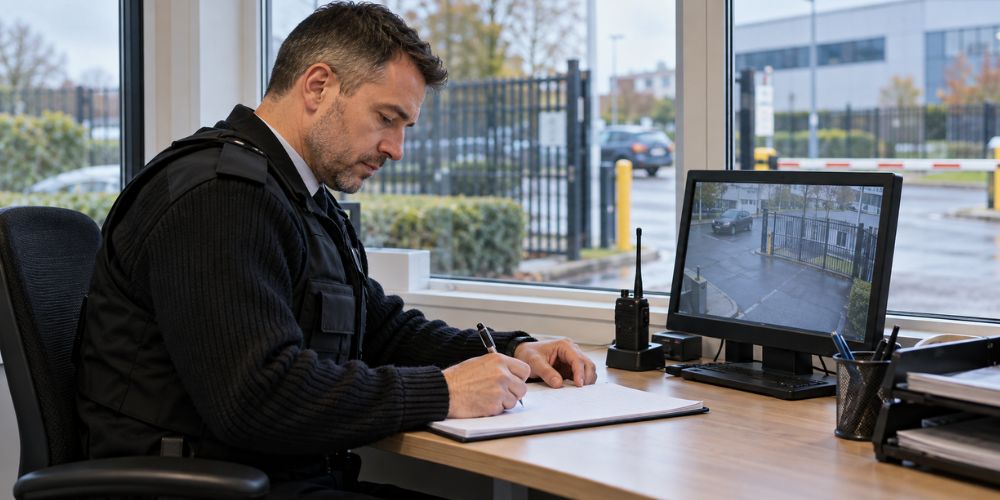
Security guards are often the first people to deal with shoplifting, aggressive behaviour, disorder at events, trespassing, or threats to staff and customers. Because of this, many people ask a simple question, can a security guard legally detain or touch you in the UK?
A security guard cannot touch, grab, restrain, search, or detain someone just because they feel like it. They are not police officers. They do not have the same legal powers as the police. In most cases, a security guard has the same basic arrest powers as any other member of the public.
However, UK law does allow reasonable force in certain situations. This may include self-defence, protecting another person, preventing crime, stopping damage to property, or carrying out a lawful citizen’s arrest. The key point is that any physical contact must be lawful, necessary, reasonable, and proportionate to the situation.
Can a Security Guard Touch or Detain You?
A security guard can legally touch or detain someone in the UK only when there is a lawful reason. For example, they may use reasonable force to stop an immediate threat, protect staff or customers, prevent theft, stop criminal damage, or hold someone briefly until the police arrive.
But the force used must match the risk. A guard cannot use violence as punishment. They cannot restrain someone for longer than needed. They cannot search someone by force in an ordinary situation. They also cannot use their job title as an excuse to act like a police officer.
A simple way to understand it is this, A security guard may act to prevent harm or crime, but they must not go beyond what the law allows.
Do Security Guards Have the Same Powers as Police Officers?
No. Security guards do not have the same powers as police officers. Police officers have specific legal powers to arrest, search, detain, and investigate. Security guards are private security staff. They may work in retail stores, offices, hospitals, construction sites, shopping centres, warehouses, events, or nightclubs, but their powers are still limited.
An SIA licence shows that a person has met licensing standards for certain security roles. It does not give that person extra police powers. A licensed security operative still has to follow the law like any other civilian.
This matters because many people wrongly believe that a uniform, badge, radio, or SIA licence gives a guard wide legal authority. It does not. A security guard can challenge someone, ask questions, refuse entry, ask someone to leave private premises, observe suspicious behaviour, report crime, and call the police. But physical detention or restraint must have a clear legal basis.
When Can a Security Guard Legally Touch You?
Physical contact by a security guard may be lawful in some situations. The most common examples are self-defence, protecting others, preventing crime, protecting property, or carrying out a lawful citizen’s arrest.
The situation must be judged carefully. The guard’s action should be based on the facts available at the time, not personal anger, guesswork, embarrassment, or pressure from other people.
Self-Defence
A security guard may use reasonable force if they are attacked or face an immediate threat. For example, if someone punches, pushes, kicks, or threatens a guard with a weapon, the guard may defend themselves.
Defence of Other People
A security guard may step in if another person is at risk of harm. This might include a customer being assaulted, a member of staff being threatened, or a vulnerable person being placed in danger.
Preventing a Crime
Security guards may use reasonable force to prevent a crime. This may involve theft, assault, criminal damage, public disorder, or other unlawful behaviour.
Protecting Property
A guard may take reasonable action to protect property from theft or damage. This often comes up in retail security, construction security, warehouse security, and office security.
Lawful Detention Until Police Arrive
A security guard may detain someone in limited circumstances under citizen’s arrest rules. This does not mean a guard can arrest anyone they dislike or suspect without strong grounds.
Citizen’s arrest is a serious step. It should normally be used only when a crime has happened or is happening, there are reasonable grounds, and police involvement is needed.
Can a Security Guard Detain You for Shoplifting?
A security guard may detain someone for suspected shoplifting if there are reasonable grounds and the legal test is met. In retail security, this usually means the guard has seen behaviour that strongly suggests theft, such as concealing goods, passing payment points, and attempting to leave without paying.
But suspicion alone can be risky. A guard should not detain someone just because they “look suspicious” or because another customer made a vague claim. Wrongful detention can lead to complaints, civil claims, reputational damage, and possible legal consequences.
If a guard detains someone for suspected theft, the detention should be temporary. The police should be called where needed. The person should be told why they are being stopped. The guard should avoid unnecessary physical contact and should not use the situation to shame, threaten, or intimidate the person. A lawful detention is not a punishment. It is a short-term step linked to preventing crime or waiting for police.
Can a Security Guard Search Your Bag, Pockets, or Clothes?
In most ordinary situations, a security guard cannot force you to be searched. They may ask to search your bag, but they usually need your consent.
This is common at shops, offices, stadiums, concerts, festivals, airports, and private venues. A venue may have entry rules that say visitors must agree to a bag check. If you refuse, the venue may refuse entry or ask you to leave. But refusal does not automatically give the guard the right to force a search.
A security guard should not normally put hands into your pockets, search inside clothing, or carry out an invasive search. If a crime is suspected and a search is needed, the police are usually the correct authority to deal with it.
There may be site-specific rules in certain controlled environments, but for most customers and visitors, forced searches by private security create serious legal risk.
Can a Security Guard Stop You From Leaving?
A security guard cannot stop you from leaving without a lawful reason. If there is no suspected crime, no immediate risk, and no legal basis for detention, a guard should not block your exit or hold you. Stopping someone from leaving without legal grounds may raise issues such as false imprisonment or assault.
However, if a lawful citizen’s arrest applies, a guard may briefly stop someone from leaving until police arrive. This should only happen when the legal conditions are met. The guard should act quickly, call the police, explain the reason, and avoid unnecessary force.
A guard should also think about welfare. If the person is young, elderly, disabled, injured, distressed, intoxicated, or medically vulnerable, the guard must take extra care. Safety matters for everyone involved.
Can Security Guards Remove You From Private Property?
Yes, security guards may ask someone to leave private property. This can happen in a shop, office, nightclub, shopping centre, hotel, building site, hospital, or private event.
A business or property owner can set rules for entry. If a person refuses to follow those rules, behaves aggressively, causes disruption, or refuses to leave after being asked, they may be treated as a trespasser.
A security guard may use reasonable force to remove a trespasser in limited circumstances. But the force must be controlled and necessary. The aim should be to remove the person safely, not to hurt them.
Can Security Guards Use Handcuffs?
Security guards in the UK are not automatically banned from carrying handcuffs, but using handcuffs is legally risky if there is no strong reason.
An SIA licence does not give a guard extra powers to use handcuffs. If handcuffs are used, the guard must be able to show that their use was lawful, necessary, reasonable, and proportionate.
Handcuffs may be considered in situations involving violence, serious risk, escape after a lawful detention, or danger to the public. But they should not be used to scare people, punish suspects, or control minor disputes.
A security company should have clear policies, training, and reporting procedures before allowing staff to carry or use handcuffs. Poor use of handcuffs can lead to injury, complaints, police involvement, and legal claims.
Can a Security Guard Touch You During a Bag Search?
A normal bag search should be consent-based. In most cases, the guard should ask you to open the bag and move items yourself. This reduces the risk of personal contact, misunderstanding, or claims of inappropriate behaviour.
A guard should not casually touch your body, pockets, clothing, or personal items without clear consent or lawful reason. If the search is part of entry screening, the visitor should understand the rule before entering.
If you do not want to be searched, you can refuse. The venue may then refuse entry or ask you to leave. That is different from being physically searched by force.
What Happens if a Security Guard Uses Excessive Force?
If a security guard uses excessive power, the consequences can be serious. The guard may face workplace discipline, dismissal, SIA licence action, civil claims, or criminal investigation. The security company or venue may also face reputational harm and possible legal liability.
Excessive force can turn a security incident into a legal problem. For example, a guard who uses a dangerous restraint on a calm person may be accused of assault. A guard who locks someone in a room without lawful grounds may face a false imprisonment complaint. A guard who continues force after the risk has ended may struggle to justify their actions. This is why proper training, calm communication, and incident records are so important in private security.
Legal Framework Behind Security Guard Powers in the UK
Security guard powers come from several legal ideas and rules. The most relevant are reasonable force, citizen’s arrest, self-defence, property rights, and duty of care.
Criminal Law Act 1967
Section 3 of the Criminal Law Act 1967 allows a person to use reasonable force in the prevention of crime or to help with a lawful arrest. This can apply to security guards, but it does not give unlimited power.
The force must still be reasonable in the circumstances.
Police and Criminal Evidence Act 1984, Section 24A
Section 24A of the Police and Criminal Evidence Act 1984 covers arrest by a person other than a constable. This is often called citizen’s arrest.
For security guards, this is highly relevant. It means a guard may only arrest someone in limited cases, mainly linked to indictable offences and situations where waiting for police is not practical. Citizen’s arrest should be treated with care because a mistake can lead to serious legal problems.
Common Law Self-Defence
Common law allows people to use reasonable force to defend themselves or others. This applies to security guards and ordinary members of the public. The key question is whether the force used was reasonable based on the situation as it appeared at the time.
SIA Standards and Professional Conduct
The Security Industry Authority regulates the private security industry in the UK. SIA licensing does not give security guards police powers, but it does set expectations around training, behaviour, and professional standards.
Security guards are expected to use communication, de-escalation, risk assessment, and safe working methods. Physical intervention should be a last resort.
Advice for Businesses Hiring Security Guards
Businesses that hire security guards should understand the legal limits of private security work. A good security service protects people and property without creating unnecessary legal risk. Clear site rules, proper training, incident logs, CCTV coverage, customer complaint routes, and strong communication standards are all important.
- Retail stores should have clear shoplifting procedures.
- Venues should have safe ejection policies.
- Offices should have visitor access rules.
- Construction sites should have trespass and access control procedures.
- Event organisers should brief guards on bag checks, refusal of entry, crowd control, and emergency response.
Security is not just about having someone at the door. It is about lawful, calm, and professional risk management.
Final Answer
A security guard can legally touch, restrain, or detain you in the UK only in limited circumstances. The action must have a legal reason, such as self-defence, protecting others, preventing crime, protecting property, removing someone from private premises, or carrying out a lawful citizen’s arrest.
Even then, the force used must be reasonable, necessary, and proportionate. Security guards are not police officers. An SIA licence does not give them extra arrest powers. They cannot use force as punishment, carry out forced searches in ordinary situations, or detain someone without proper grounds.
For the public, the key is to know your rights and stay calm. For businesses, the key is to use trained, licensed, professional security staff who understand UK law, reasonable force, duty of care, and safe physical intervention.