Warehouses can be difficult to secure. Staff, drivers, contractors, and visitors may arrive throughout the day, while goods move in and out through several doors and loading bays. With so much activity, it is easy to miss an open gate, an unfamiliar person, or stock that has gone missing.
A good security plan starts with the risks on your site. Once you know where the weak points are, you can decide which checks, equipment, and security services will help. This guide covers the common risks and practical steps warehouse managers can take to reduce them.
Common Security Risks in Warehouses
Unauthorised Entry
Someone may enter a warehouse through a loading bay, a staff entrance, or a gate that has been left open for a delivery. A person following an employee through a secure door can also go unnoticed when the site is busy.
Set clear rules for each entrance. Keep doors and gates closed when they are not in use, and decide who is allowed into storage areas, offices, and yards. Staff should know how to check an unfamiliar person’s reason for being on site without putting themselves at risk. Access control works best when it is backed by staff training and a clear visitor process.
Theft of Stock and Equipment
Stock can go missing during receiving, storage, picking, or dispatch. Tools, handheld scanners, and vehicle keys may also be at risk. If inventory records are poor, a loss may not be noticed until long after it happened.
Check incoming goods against delivery records and confirm what leaves the site. Limit access to high-value stock and keep a record of who can enter those areas. Regular stock counts can help you find discrepancies sooner.
Treat missing goods as a problem to investigate fairly. A recording error, delivery mistake, or damaged item may explain a difference. The National Business Crime Centre’s warehouse guidance recommends controlling access and using measures such as CCTV to address internal theft risks.
Trespassing and Antisocial Behaviour
A warehouse yard may attract trespassers outside working hours, especially if gates are easy to enter or parts of the site are hidden from view. Repeated trespassing can also lead to damage or create safety concerns for staff arriving early or leaving late.
Inspect fences and gates, keep outdoor areas reasonably well lit, and remove items that make it easy to climb into the site. Ensure employees know whom to contact if they find an unauthorized person on the premises. They should report the situation and avoid confronting the person.
Vandalism and Property Damage
Vandalism can affect walls, vehicles, windows, fencing, and outdoor equipment. The cost is not limited to repairs, a damaged gate or window may also leave the warehouse exposed until it is fixed.
Walk the perimeter regularly and report damage promptly. Check whether lighting or camera views cover areas where incidents have occurred. Keep a record of what happened, when it was discovered, and any footage that may help with a report.
Poor Control of Delivery Vehicles
Busy loading areas can make it hard to tell which vehicles are expected and where drivers should go. An unchecked vehicle may enter the yard, stop near valuable stock, or leave without the right goods being verified.
Give drivers clear arrival instructions and use a designated check-in point where practical. Confirm deliveries and collections against the day’s schedule. Keep loading bays supervised while goods are being moved, and separate visitor parking from operational areas if the site allows it.
Security Services for Warehouses
The right services depend on the size of your warehouse, its opening hours, the goods stored there, and the risks you have identified. A small site may need support outside working hours, while a larger operation may need someone managing access throughout the day.
Security Guards
On-site security guards can check arrivals, manage entry points, patrol agreed areas, and report concerns. Their duties should be clear from the start. For example, a guard assigned to a gate needs to know how to verify a delivery, what information to record, and whom to contact if there is a problem.
Guards also need a way to communicate with warehouse staff. If the loading team changes a delivery schedule, the person checking vehicles should receive the update.
Mobile Patrols
Mobile patrols may suit a warehouse that does not need a guard on site at all times. Patrols can check gates, doors, yards, and other agreed areas outside operating hours.
Before arranging a patrol service, decide what should be checked and how issues should be reported. A record of each visit makes it easier to follow up on a damaged fence, an unlocked door, or signs of attempted entry.
CCTV Monitoring
CCTV can help staff or a monitoring team observe entrances, loading bays, yards, and stock areas. Place cameras where they provide a useful view of activity, then check that the footage is clear enough to review.
A camera should have a purpose. If it covers a loading bay, decide whether it needs to show arriving vehicles, the movement of goods, or both. Test its view after dark and keep it free from obstructions. Make sure the people responsible know how to retrieve footage after an incident.
Access Control and Visitor Management
Access cards, codes, keys, and visitor procedures help you control who enters different parts of a warehouse. The process can be simple, but it must be followed consistently.
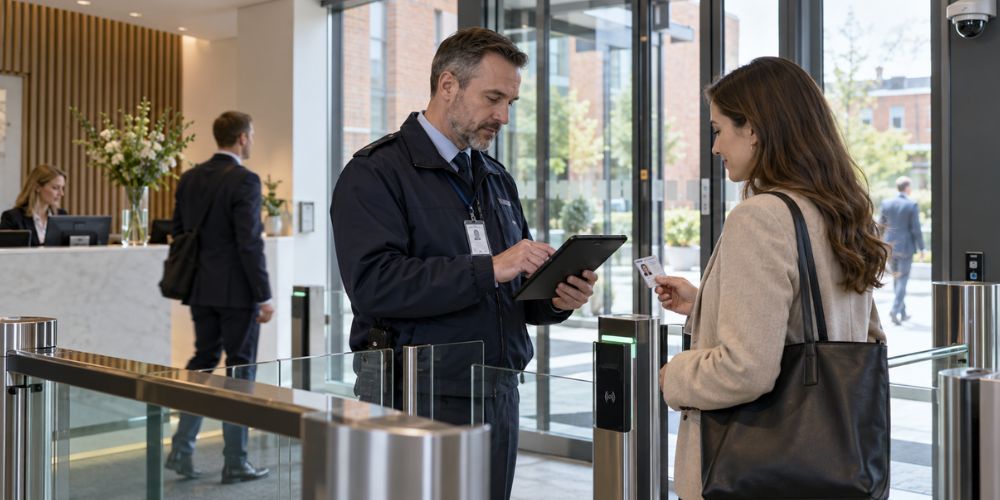
Record visitors and contractors when they arrive, explain where they may go, and make sure they leave through the agreed exit. Review staff access when roles change or employees leave. Access controls should be based on the risks at the site, with staff trained to follow entry procedures and avoid allowing unauthorised people to enter secure areas.
Key Holding and Alarm Response
An alarm needs a clear response plan. If it sounds overnight, someone must know who receives the alert, who can attend the site, and what they should do on arrival.
A key holding and alarm response arrangement can give a designated responder access to the property when an alert needs to be checked. Agree in advance how they will verify the cause, contact the warehouse manager, and report what they find. Keep the contact list and access instructions up to date.
How to Improve Warehouse Security Step by Step
- Start with a Walk Around the Site: Check the perimeter, doors, loading bays, yard, parking areas, and high-value stock locations. Do this during working hours and when the warehouse is closed. Note broken equipment, poor visibility, and places where access is difficult to control.
- Review How People and Goods Move: Follow a typical delivery from arrival to departure. Check who verifies the driver, who confirms the goods, and which doors are open during loading. Do the same for visitors, contractors, employees, and outgoing stock.
- Prioritise the Problems You Find: Fix broken locks, gates, lights, and cameras promptly. Then consider whether changes to procedures or additional security services would address the remaining risks.
- Give People Clear Responsibilities: Staff should know who checks visitors, who closes each entrance, how to report missing stock, and who responds to an alarm. A short written procedure is easier to follow than instructions passed from person to person.
- Review the Plan Regularly: Check it again after an incident, a change in operating hours, a new loading arrangement, or a change in the type of goods stored. A risk assessment should reflect how the warehouse actually works.
Warehouse Security Mistakes to Avoid
- One common mistake is relying on cameras while leaving entrances poorly controlled. Footage may help you understand an incident later, but it does not replace a working gate, a secure door, or a visitor check.
- Another is giving too many people unrestricted access. Staff, drivers, and contractors do not all need to enter the same areas. Review permissions and collect keys or passes when they are no longer needed.
- Businesses can also overlook loading bays and outdoor areas while concentrating on the main building. Check what happens when shutters are open, goods are waiting to be loaded, or vehicles are parked in the yard.
- Finally, do not let small faults sit unresolved. A camera with a blocked view, a light that has failed, or a gate that does not close properly weakens the wider security plan. Record faults, assign someone to fix them, and check that the repair has been completed.
When Your Business Needs Professional Security
Break-ins, theft, and unauthorised visitors can put your employees, property, and daily operations at risk. The need for security becomes greater when your business holds valuable stock, has areas that are difficult to monitor, or operates outside regular hours.
At G3 FM Services, we provide professional security services to help businesses protect their people, property, and stock. Our security officers can monitor entrances, manage visitor access, patrol the premises, and respond promptly when an issue arises. We take the time to understand how your site operates so we can provide the right level of coverage during business hours, overnight, or whenever you need it. Contact G3 FM Services to discuss your security needs and find a practical way to keep your business safer.
Conclusion
Warehouse security depends on knowing who and what enters the site, protecting stock as it moves, and spotting problems early. Secure entrances, controlled deliveries, clear staff procedures, and working equipment all play a part.
Start with a review of your warehouse and address the most pressing risks first. If your site needs professional support, G3 FM Services can discuss your security concerns and help you consider the level of service that suits your operation.