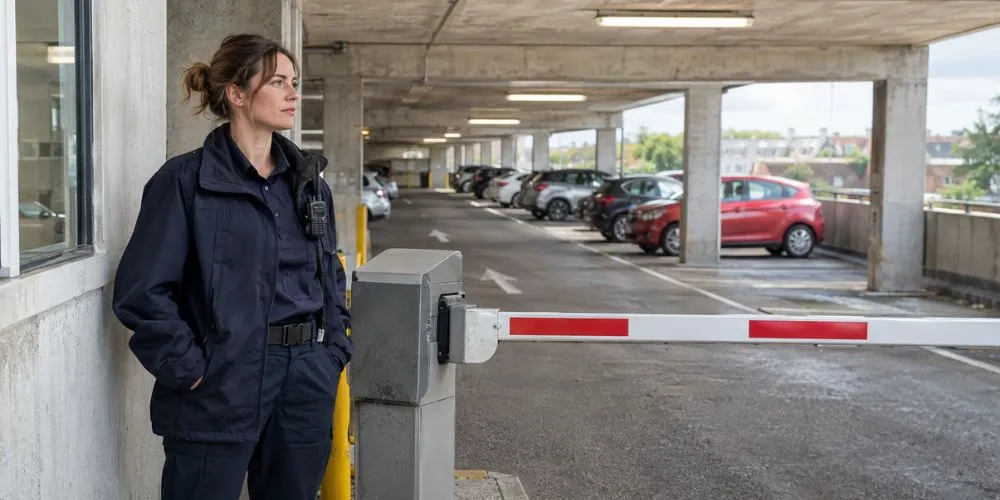
Shoplifting puts security guards in a difficult position. A guard may see someone hide an item in a bag or walk past the tills without paying. But deciding what to do next is not simple. The evidence, the safety of staff and customers, and the guard’s legal powers all matter.
So, can security guards stop shoplifters in the UK? Yes, in certain situations. A guard can approach a suspected shoplifter, ask them to stop and ask for the goods back. If strict legal conditions are met, they can make a citizen’s arrest and use reasonable force. However, an SIA licence does not give a guard police powers, and they cannot search anyone without consent.
This guide explains what security guards can and cannot do, the laws that apply, and how retailers can help their security teams respond safely and lawfully.
What Does “Stopping a Shoplifter” Actually Mean?
Stopping a shoplifter can mean different things. A guard may ask a customer to wait while a payment is checked, ask to look inside a bag, or prevent someone from leaving by making a lawful arrest.
These actions are not the same. Agreeing to answer a question is different from being detained, and a security guard has no more power than any other member of the public.
This is why a guard may be able to speak to a shopper but still have no legal grounds to hold them.
What Counts as Shoplifting in UK Law?
Shoplifting is theft from a shop. Under the Theft Act 1968, it happens when someone dishonestly takes goods that belong to the retailer and intends to keep them. Whether an incident counts as theft depends on what the person did and what they intended.
Suspicious behaviour does not always mean someone is stealing. A shopper who puts an item in their own bag may still plan to pay for it, so guards should look at the full picture before reaching a conclusion.
Theft does not only happen once someone leaves the shop. Many stores ask guards to wait until a person passes the tills before approaching them, but this is store policy. It does not decide whether theft has legally taken place.
Do Security Guards Have Police Powers?
Same Powers as Any Member of the Public
No. In the UK, a security guard has the same legal powers as any other citizen. Their power to arrest a shoplifter comes from the citizen’s arrest rules, not from their job title.
What an SIA Licence Does and Does Not Do
The Security Industry Authority (SIA) licenses people who carry out certain security work. A licence shows that a guard has completed approved training and passed identity and criminal record checks. It does not give them extra powers to arrest, search or use force.
Store Policy Can Be Stricter Than the Law
A retailer or security company can tell its guards to do less than the law allows. Many stores have an “observe and report” policy because of staff safety, insurance and reputation. A guard who breaks this policy may face disciplinary action, even if what they did was legal.
Store policy cannot give guards more power than the law. A sign saying “bags may be searched” does not allow a guard to search anyone by force.
How Do Security Guards Stop Shoplifters? Step by Step
Most shoplifting incidents are handled without any physical contact. A professional response usually follows these steps.
1. Watch the Shop Floor and CCTV
Guards patrol the store, stay visible and monitor CCTV. A visible guard is one of the best ways to prevent theft. When something looks wrong, they focus on what the person does, such as hiding items or removing tags, not on how they look.
2. Check the Evidence
Before approaching anyone, the guard should be sure about what happened. Did they see the item being taken? Did they keep the person in sight the whole time? Could the person have paid at a self-checkout? A quick check of CCTV or a word with a colleague can prevent a mistake.
3. Approach the Person Calmly
The guard should introduce themselves, explain the concern politely and give the person a chance to respond. For example: “Hello, I work in store security. I think the item in your bag may not have been paid for. Can we sort it out?” Raised voices or public accusations make conflict more likely.
4. Use Communication to Calm the Situation
Most incidents can be settled by talking. When a guard speaks calmly and explains the problem clearly, the person is less likely to react badly. If they become threatening, the guard should step back and call for help. Keeping staff and customers safe matters more than recovering the goods.
5. Call the Police and Preserve Evidence
The guard should save CCTV footage, note times, descriptions and the goods involved, and find any witnesses. If someone has been arrested, the police must be called straight away. If the person gets away, good evidence still allows the theft to be reported.
When Can a Security Guard Detain a Shoplifter?
A security guard can only hold someone if the rules for a citizen’s arrest are met. In England and Wales, these rules come from section 24A of the Police and Criminal Evidence Act 1984 (PACE).
In simple words, a guard can detain a shoplifter only if:
- they saw the theft happen, or have strong reasons to believe the person stole something
- holding the person is necessary, for example to stop them running off before the police arrive or to stop someone getting hurt
- the police are not there to make the arrest themselves
If any of these is missing, the guard should not hold the person. A guess, a feeling or a refused bag search is not enough. A guard also cannot hold someone just to check CCTV.
If the guard does detain someone, they must tell the person they are being arrested and why. They should then call the police straight away, keep the person somewhere safe and hand them over when the police arrive. If it turns out the person did nothing wrong, they must be let go immediately.
Getting this wrong can be serious. An unlawful detention can lead to a claim for false imprisonment or assault against the guard and their employer.
What Evidence Should a Guard Rely On?
Before acting, a guard should be clear about what they actually saw. What they saw with their own eyes counts for more than what a colleague told them or what they assumed. Useful details include the item taken, where it was hidden, where the person went, whether they passed the tills and whether the guard lost sight of them at any point. Anything the guard is unsure about should be written down honestly.
Guards should judge people by what they do, not how they look. “Put two items in a rucksack and walked past the last till” is evidence. “Looked like a shoplifter” is not. Treating someone differently because of their race, age, disability or other personal traits is unfair and can break the Equality Act 2010.
Can Security Guards Use Force Against Shoplifters?
Yes, but only in limited situations. Under section 3 of the Criminal Law Act 1967, anyone can use reasonable force to prevent a crime or make a lawful arrest. The force must be necessary and no more than the situation needs.
This means a guard can only touch someone when there is a lawful reason, such as a lawful arrest. Holding someone’s arm is very different from pushing them to the ground. Handcuffs are not illegal to carry, but they should only be used by trained guards when there is a real risk of violence or escape.
Force becomes unlawful if it goes too far, is used to punish someone, or continues after the person has stopped resisting. In that case, the guard can be prosecuted and their employer may face legal claims.
Can Security Guards Search Your Bag?
Only if the customer agrees. A guard can ask to check a bag, pocket or coat, but the person must give clear consent. Security guards do not have police stop and search powers, and a sign at the shop entrance does not change this.
If someone refuses, the guard cannot search them anyway, and refusing does not prove theft. The store can simply ask the person to leave. Even after a lawful citizen’s arrest, the guard should not search the person and should leave this to the police. Grabbing a bag or reaching into someone’s pockets without consent can be an assault.
Should Security Guards Chase Shoplifters?
Usually not. A guard has no special power to chase anyone. A chase can quickly become more dangerous than the theft itself, especially near roads, stairs, crowds or when the person may be armed.
A guard may follow at a safe distance to watch where the person goes and pass this to the police, if store policy allows. Once following creates a risk, the guard should stop and report instead.
Police advice for retailers is to avoid provoking offenders, put personal safety first and focus on gathering good information. Goods can be replaced. People cannot.
Why Security Guards Do Not Always Stop Shoplifters
Shoppers are sometimes surprised when a guard watches a theft and does nothing. There are good reasons for this:
- The evidence is not strong enough. If the guard lost sight of the person, acting could mean detaining someone innocent.
- The risk of violence is too high. Shop staff increasingly face threats, weapons and organised groups.
- Store policy says observe and report. Many retailers and insurers prefer guards not to intervene physically.
- The force needed would not be proportionate. Restraining someone over a low-value item is hard to justify if they pose no danger.
- Evidence can be more useful than a capture. Clear CCTV and a good description can lead to a prosecution without anyone getting hurt.
Guards are not powerless. A good guard is judged on safety, legality and the quality of their evidence.
What Security Guards Cannot Do
When dealing with suspected shoplifting, a security guard must not:
- Claim to have police powers
- Detain someone because of a hunch, their appearance or a refused bag search
- Search a person or their belongings without consent
- Use excessive force, or use force as punishment
- Keep restraining someone after the need has passed
- Force a confession or demand to see someone’s phone
- Threaten or publicly embarrass a suspect
- Carry or use CS spray or pepper spray, which are banned weapons in the UK
- Treat anyone unfairly because of a protected characteristic
What If a Security Guard Stops the Wrong Person?
If the evidence does not support the suspicion, the guard should let the person go straight away, apologise and record what happened. Holding someone after it is clear they are innocent can turn an honest mistake into an unlawful detention.
If you are stopped and believe you have done nothing wrong, stay calm and ask whether you are being detained and why. You do not have to agree to a search. Ask for a manager, keep your receipt and note the guard’s name or SIA badge number. If you feel in danger, call 999. Otherwise, you can complain to the store or report it to the police on 101.
How Retailers Can Support Their Security Team
Retailers and security companies should agree to clear rules before any incident happens. These are usually written as assignment instructions. They should explain what the guard is expected to do, what evidence is needed before approaching someone, when to call the police, and how to handle bag checks, children and vulnerable people.
Training should also suit the site, as a supermarket and a shopping centre face different risks. Reviewing incidents regularly helps retailers spot problems and keep their instructions up to date.
How Retail Security Can Help
Professional retail security does much more than catch shoplifters. Trained guards prevent theft by being visible, protect staff from abuse and violence, and collect clear evidence that the police can act on. Most importantly, they understand the legal limits, so incidents are handled safely and fairly.
At G3 FM, we provide SIA-licensed manned security officers tailored to your store, your risks and your policies. We work with you to agree to clear instructions, from evidence rules to police escalation, so our officers know exactly how to respond when theft is suspected. Contact G3 Security today to protect your store, your staff and your stock.
Conclusion
Security guards in the UK can stop shoplifters, but not in the way many people think. They can watch, approach, ask questions and ask for goods to be returned. In the right situation, they can make a citizen’s arrest and use reasonable force. They cannot act like police officers. They cannot force a search, detain someone on a hunch or use more force than needed.
Good retail security depends on careful observation, calm communication and clear procedures agreed in advance. Knowing when to step in, when to call the police and when to simply gather evidence protects both the business and the people inside it.