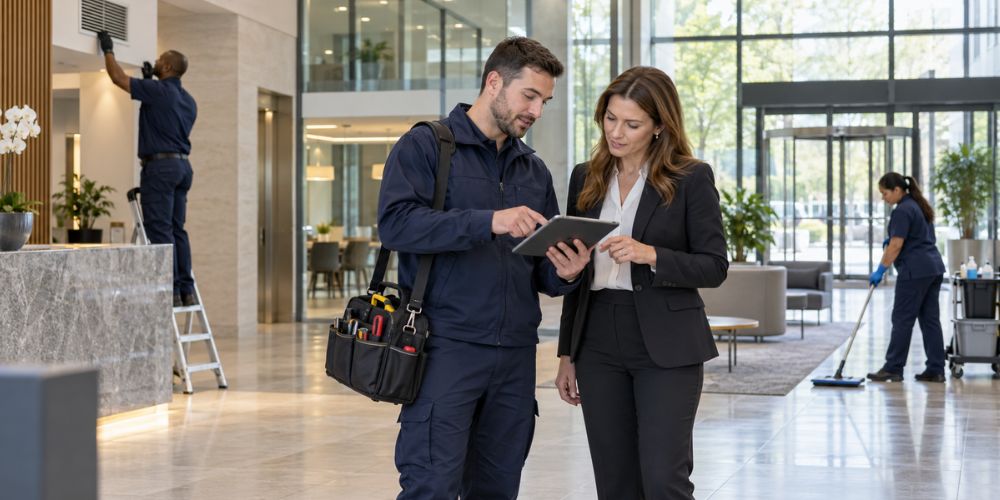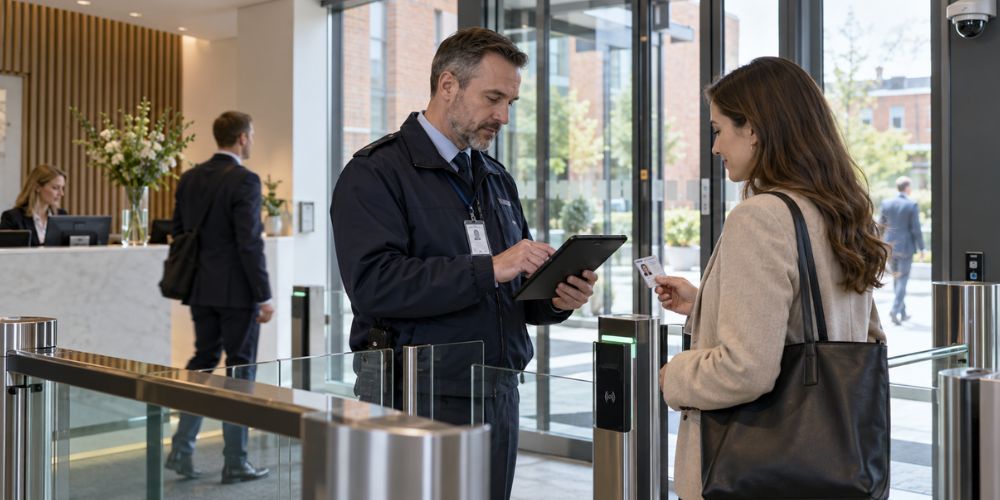
Security officers are often one of the first people visitors, customers and staff meet when they arrive at a building or site. While their main responsibility is to protect people, property and premises, the way they interact with others can also affect the overall experience.
A security officer may be asked for directions, help with access, information about a site or assistance with a particular concern. Handling these interactions properly can help create a positive environment while allowing officers to maintain the required security standards.
Good customer service does not mean putting security procedures aside. It means carrying out security duties while treating people with courtesy, patience and respect.
What Does Good Customer Service Mean for Security Officers?
Customer service in a security role involves more than simply being polite. Officers need to understand the site, follow its procedures and provide appropriate assistance when dealing with visitors, staff and customers. Good customer service can include:
- Welcoming visitors appropriately
- Providing clear directions and information
- Listening to people’s questions or concerns
- Explaining site procedures clearly
- Helping people understand access requirements
- Knowing when to refer an enquiry to another member of staff
- Treating people fairly and respectfully
The exact approach will depend on the type of site and the responsibilities given to the security team.
Why is Customer Service Important in Security?
Security officers represent the organisation they work for whenever they interact with people on site. A helpful and respectful approach can make visitors feel more comfortable while supporting the wider experience of the business.
Good customer service can also make security procedures easier to follow. When people understand why they need to provide identification, follow a particular route or wait for authorisation, they may be more willing to cooperate.
For businesses, this can help create a workplace or public-facing environment where security and customer service work together rather than being treated as separate responsibilities.
Understand the Site and Its Services
A security officer needs to know the site they are working at. Without this knowledge, it can be difficult to provide useful assistance to visitors and staff. Before starting their duties, officers should understand relevant information such as:
- Main entrances and exits
- Reception and visitor areas
- Access-controlled areas
- Emergency routes
- Parking and delivery areas
- Important facilities
- Visitor procedures
- Key contacts and departments
For example, a visitor asking where to report for an appointment should receive clear and useful information rather than being sent to another area without explanation.
Good knowledge of the site allows officers to provide assistance while continuing to remain aware of their security responsibilities.
Listen to Visitors and Staff
People may approach a security officer for different reasons. They may need directions, have a question about access or need help finding the right person. Taking the time to understand what they need can make it easier to provide the right response. Security officers should:
- Listen carefully before responding
- Give people time to explain their question or concern
- Avoid making assumptions
- Ask questions when more information is needed
- Provide information that is relevant to their role
- Direct people to the appropriate member of staff when necessary
Listening carefully can help prevent misunderstandings and make interactions easier, particularly at busy entrances or when dealing with visitors who are unfamiliar with the site.
Give Clear and Useful Information
Visitors should be able to understand the information they receive from a security officer. Simple and clear instructions can make it easier for people to follow site procedures. For example, officers may need to explain:
- Where visitors should check in
- Which entrance to use
- Where deliveries should be reported
- Where a particular department is located
- What identification is required
- Who a visitor should contact
Information should be accurate and based on the site’s procedures. If an officer does not know the answer, it is better to find the correct information or refer the person to someone who can help.
Balance Customer Service With Security Procedures
Providing good customer service does not mean making exceptions to security procedures. Officers still need to follow the rules and requirements set for the site.
A visitor may be unhappy about showing identification or waiting for access, but the officer should still follow the required procedure. They can explain the reason for the requirement where appropriate and deal with the person respectfully. Officers should:
- Follow the site’s security procedures
- Explain requirements clearly where appropriate
- Remain respectful when dealing with visitors
- Avoid making exceptions that could create a security risk
- Explain why identification or access checks are required
- Provide clear information when access cannot be given
- Refer unusual or difficult requests to the appropriate person
For example, an officer can explain that identification is required before access can be provided rather than simply refusing entry without an explanation. This balance is important because good customer service should support security, not weaken it.
Help Visitors Who Need Additional Assistance
Some visitors may need more help than others when arriving at a site. They may be unfamiliar with the building, unsure where to go or require additional assistance when moving around the premises.
Security officers can help by providing clear directions and allowing people enough time to understand the information being given. This may include helping visitors find:
- Reception areas
- Meeting rooms
- Accessible entrances
- Lifts and facilities
- Waiting areas
- Specific departments
Officers should provide appropriate assistance while respecting the person’s privacy and following the site’s procedures.
Handle Complaints in the Right Way
Security officers may sometimes receive complaints from visitors, customers or staff. The complaint may relate to access procedures, waiting times, parking, identification requirements or another issue.
The officer should remain calm and focus on understanding the concern rather than becoming argumentative. Depending on the situation, they can:
- Listen to the complaint
- Explain the relevant procedure
- Provide information they are authorised to give
- Refer the matter to the appropriate person
- Record the issue where required
Not every complaint can be resolved by the security officer. Knowing when to involve a supervisor, manager or another department is an important part of providing appropriate customer service.
Work With Other Site Teams
Security officers often work alongside reception staff, facilities teams, management, cleaning teams and other employees. Good cooperation between these teams can make it easier to deal with visitors and respond to day-to-day issues. Security officers should:
- Communicate clearly with reception and other teams
- Know who to contact for different types of enquiries
- Pass visitor information to the relevant person when needed
- Work with site teams to deal with day-to-day issues
- Avoid unnecessary delays when directing visitors
- Share relevant information with the appropriate team
- Follow the site’s agreed communication procedures
For example, a security officer may receive a visitor at the entrance and then need to contact reception or the relevant department. Clear communication between teams can help avoid unnecessary delays and confusion, particularly on busy sites where officers may deal with a large number of people during the day.
Maintain a Consistent Standard of Service
Customer service should remain consistent throughout a security officer’s shift. Busy periods, staff changes and unexpected situations can make this more difficult, but visitors should still receive clear information and appropriate assistance. Consistency can be supported by:
- Clear site procedures
- Proper staff training
- Good handovers between shifts
- Up-to-date site information
- Clear responsibilities
- Regular communication with management
When officers understand what is expected of them, they can provide a more consistent service while continuing to follow security requirements.
How Training Can Support Better Customer Service
Training can help security officers understand how to deal with different types of people and situations they may encounter during their duties. Depending on the site, training may cover:
- Customer service
- Site procedures
- Conflict management
- Visitor handling
- Access control
- Emergency procedures
- Incident reporting
- Communication with other teams
Site-specific training is particularly useful because officers need to understand the procedures and expectations of the premises where they work.
Common Customer Service Mistakes Security Officers Should Avoid
Small mistakes can affect how visitors and staff view the security service. Officers should avoid behaviours that can create unnecessary frustration or confusion. Common issues can include:
- Ignoring someone who needs assistance
- Giving unclear directions
- Speaking too abruptly
- Failing to listen to a concern
- Providing information without checking that it is correct
- Arguing with visitors
- Failing to explain basic security procedures
- Sending people to the wrong department
These issues can often be reduced through clear procedures, appropriate training and regular feedback.
How Good Customer Service Can Support Security
Customer service and security can work together when officers understand how to communicate with people while maintaining site procedures.
A helpful approach can encourage visitors and staff to cooperate with access requirements, report concerns and follow site rules. It can also make it easier for officers to build positive working relationships with the people who regularly use the premises.
The aim is not to make security less strict. It is to deliver security in a way that is clear, respectful and appropriate for the people using the site.
How Security Company Can Help You
At G3 FM Services, we understand that security officers often represent the first point of contact for visitors, staff and customers. Our officers can provide security support while maintaining a courteous and helpful approach when dealing with people on site.
Our security services can support businesses with security guarding, site security, access control, event security and other requirements based on the needs of the premises.
We take the time to understand the site and its requirements so that security officers know the procedures they need to follow and the responsibilities expected of them.
If your business needs security officers who can provide a strong security presence while dealing appropriately with visitors, staff and customers, contact G3 FM Services to discuss your requirements.
Conclusion
Good customer service is an important part of many security roles. Security officers may be responsible for protecting a site, but they also interact with the people who use it every day.
By understanding the site, providing clear information, helping visitors appropriately and following security procedures consistently, officers can support both a positive experience and effective site security.
The right approach is to make customer service part of good security practice rather than treating the two as separate responsibilities.