It’s easy to lump “security guard” and “bodyguard” together, both are trained, licensed professionals whose job is to keep people safe, and both need to stay calm and alert under pressure. But despite the overlap, they’re genuinely different roles, with different day-to-day duties, different skill sets, and different price tags.
Knowing the difference matters if you’re arranging protection for a business, an event, or your family, get it wrong and you either overpay for more than you need, or end up under-protected when it counts. Here’s how the two roles actually differ, and how to work out which one fits your situation.
What Does a Security Guard Do?
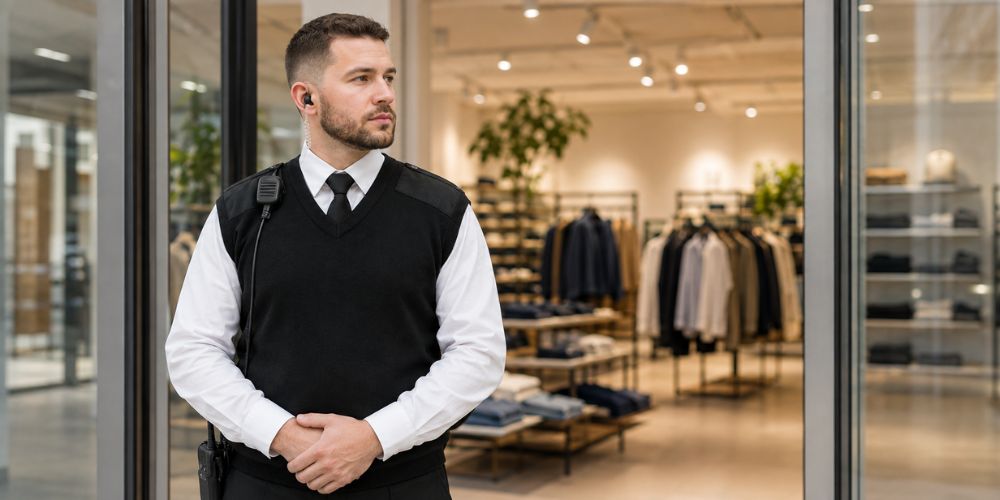
A security guard, sometimes called a security officer, protects a location and everyone in it, rather than any one individual. Think shopping centres, offices, warehouses, construction sites, car parks, hospitals, and retail stores.
Typical duties include:
- Controlling who comes in and out, and checking credentials
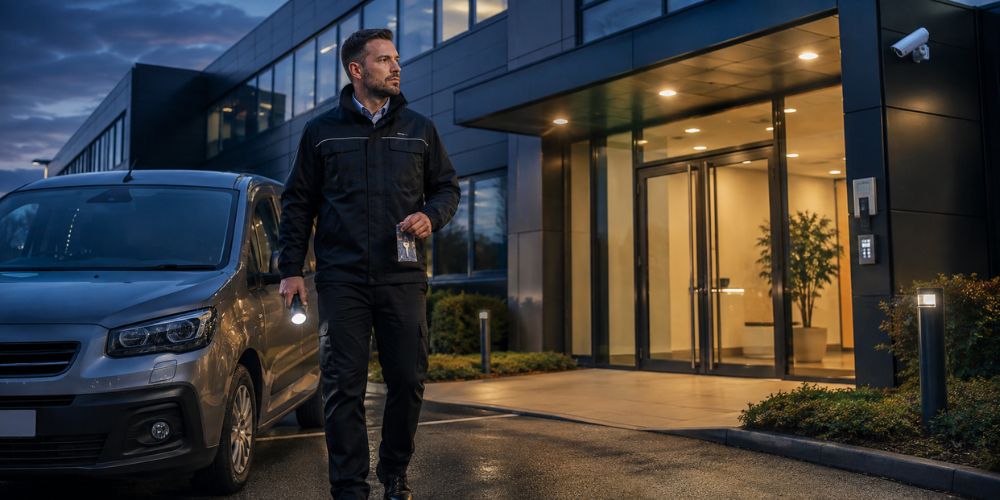
- Patrolling to spot and deter suspicious activity
- Monitoring CCTV and alarm systems
- Responding to theft, trespassing, or anti-social behaviour
- Logging incidents and writing reports
- Coordinating with police or emergency services when needed
The job is fundamentally about deterrence and prevention: a visible, professional presence puts off would-be criminals, and an alert guard catches problems early. Guards are usually based at a fixed site or working a set patrol route, keeping watch over everyone within that space rather than following any single person.
What Does a Bodyguard Do?
A bodyguard, properly known as a close protection officer (CPO), protects one specific person or a small group, going wherever that person goes. The focus shifts from a place to a person.
Close protection typically covers people facing a heightened personal risk: celebrities, senior executives, politicians, royalty, high-net-worth individuals, and occasionally private individuals dealing with stalking or targeted threats. The work is highly tailored to that one client (referred to as the “principal”) and can include:
- Assessing threats and planning routes and movements ahead of time
- Staying with the principal throughout their day
- Scouting venues before the principal arrives
- Arranging or driving secure transport
- Vetting people who come into contact with the principal
- Acting immediately to get the principal out of danger if a threat appears
Close protection is proactive by design. A good CPO spends far more time preventing problems than reacting to them, studying schedules, spotting vulnerabilities, and rehearsing what-if scenarios so the “muscle” side of the job is rarely needed. Discretion often matters just as much as physical readiness; the best protection is frequently the kind no one even notices.
How the Two Roles Actually Differ
Place vs. Person
This is the core distinction. A security guard is tied to a location, part of the building or site, in effect. A bodyguard is tied to a person and moves wherever they move. Nearly every other difference flows from this one.
Static vs. Mobile
A guard’s world is bounded by a perimeter, a site, a building, a patrol route. A CPO’s day might run from a private home, through city traffic, into a public event, and end at a hotel, adjusting the protective approach at every stop.
Reactive vs. Proactive
Guards are trained to respond well when something happens, but most of the job is about visible deterrence. Close protection is built around planning ahead, a CPO’s most important work often happens before the client even leaves the house, assessing routes, checking venues, and preparing for situations that, ideally, never occur.
Training and licensing (UK)
Both roles fall under the Security Industry Authority (SIA), which licenses the UK’s private security sector. Anyone working in either role for pay needs the right frontline SIA licence, an approved licence-linked qualification, and a clean criminal record check, and must be at least 18.
- The Security Guarding licence covers static guarding, access control, patrols, and incident response, the qualification can be completed within days.
- The Close Protection licence is the SIA’s most demanding frontline qualification, with far longer, more intensive training covering threat assessment, protective planning, surveillance awareness, first aid, and emergency response. Given the added responsibility, CPOs typically earn more than guards.
Notably, a Close Protection licence also qualifies the holder to work as a security guard or door supervisor, the broader training covers that ground too. It doesn’t work the other way: a security guard can’t take on close protection work without the specific CP licence.
Cost. Given the specialised training, one-to-one focus, and higher stakes involved, close protection costs considerably more than standard guarding. A security guard offers steady, cost-effective protection for a site and the people in it. Close protection is a bespoke, premium service built around one client, often involving advance planning, multiple operatives, and secure transport. Which one makes sense depends entirely on what, or who, is actually at risk.
Which One Do You Actually Need?
It comes down to one question: are you protecting a place, or a person?
A security guard is probably the right call if you want to:
- Secure a business site, shop, office, or construction site
- Control entry and exit at a location
- Deter theft, vandalism, or trespassing
- Provide a visible, reassuring presence at a venue or residential site
- Maintain ongoing, affordable protection for property and the people in it
A bodyguard / close protection officer is probably the right call if you want to:
- Protect someone facing a specific, credible threat
- Provide security for a public figure, executive, or other high-profile individual
- Ensure safe, coordinated travel between locations
- Manage risks tied to stalking, harassment, or targeted threats
- Deliver discreet, highly personal protection wherever the client goes
The two aren’t mutually exclusive, a large corporate event might use guards to manage the venue and control access, while a close protection team shadows a VIP speaker throughout. Used together, they form a layered approach rather than competing services.
The Bottom Line
Both roles share the same goal, keeping people safe, but they go about it in very different ways. A security guard is the steady, visible presence watching over a place and everyone in it. A bodyguard is the dedicated, forward-planning shield built around one person. One guards a perimeter. The other guards a person.
If you’re not sure which level of protection fits your situation, a proper risk assessment from an SIA-licensed provider can point you toward the right, and proportionate, solution.