Gatehouse security plays an important role in modern physical security architecture by acting as the primary control point for safeguarding commercial, residential, and industrial properties. Positioned at the perimeter entry point, it serves as the first line of defence against unauthorised access, security breaches, and operational risks.
A professionally managed gatehouse integrates human security personnel with advanced access control systems, surveillance technologies, and procedural security protocols to provide a secure and controlled environment. Whether deployed in gated communities, corporate facilities, healthcare institutions, or industrial zones, gatehouse security makes strong overall property protection and risk mitigation.
What is Gatehouse Security?
Gatehouse security refers to the deployment of trained security officers at controlled access points such as gates, barriers, and perimeter checkpoints. Their primary function is to regulate, authenticate, and authorise all incoming and outgoing movement within a secured facility.
It operates as a physical access control, which verifies every individual, vehicle, and delivery before granting entry or exit clearance.
Gatehouse security is commonly implemented across:
- Residential gated communities and housing estates
- Corporate office complexes and business parks
- Industrial manufacturing and logistics facilities
- Healthcare institutions and hospitals
- Government and critical infrastructure buildings
- Hospitality environments such as hotels and resorts
By applying structured access control protocols, gatehouse security significantly reduces exposure to threats such as theft, vandalism, and illegal access.
Role of Gatehouse Security Officers
Gatehouse security officers are responsible for maintaining perimeter integrity and maintaining strict compliance with site-specific security policies. Their responsibilities extend beyond physical gate monitoring and include operational security management, verification procedures, and incident documentation.
Security Protocol Enforcement
Security officers implement standard operating procedures (SOPs) and access control policies to permit only authorised personnel entry.
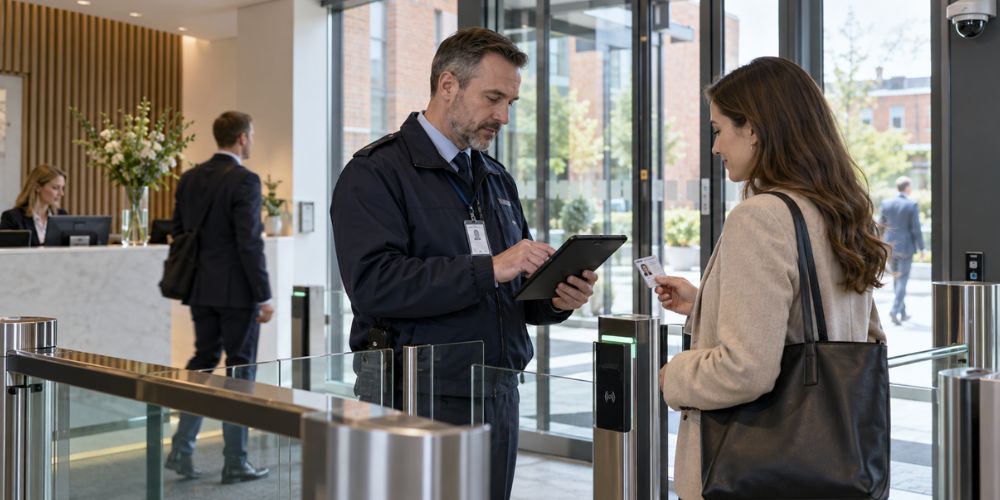
- Identity verification of individuals at the point of entry
- Credential validation against authorised access records
- Application of defined security clearance levels
- Confirmation of access rights prior to entry approval
They also maintain compliance with organisational security frameworks and coordinate with supervisory teams and emergency response units when required.
Access Control and Identity Verification
A core function of gatehouse security is managing access control systems and authentication processes. This includes:
- Verification of government-issued identification and access credentials
- Validation of visitor appointments and authorisation requests
- Monitoring inbound and outbound vehicle movement
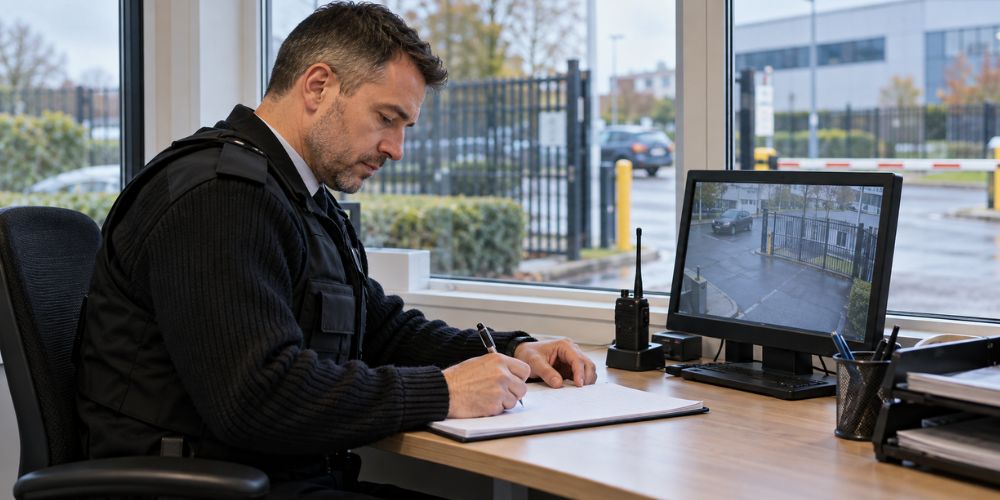
- Maintaining digital or manual access logs
- Issuing temporary access passes or security badges
Modern security infrastructures often integrate biometric authentication systems, RFID access control, intercom systems, and automated barrier mechanisms to enhance accuracy and operational efficiency.
Surveillance and Security Monitoring
Gatehouse operations are integrated into a broader security surveillance ecosystem that includes CCTV networks, perimeter intrusion detection systems (PIDS), and real-time monitoring platforms.
Security guards uk are trained to:
- Monitor live surveillance feeds across entry and exit points
- Identify suspicious or anomalous behaviour patterns
- Coordinate with security control rooms
- Respond to automated security alerts and system triggers
- Verify functionality of surveillance and recording equipment
Advanced technologies such as Automatic Number Plate Recognition (ANPR) and intelligent video analytics significantly improve situational awareness and threat detection capabilities.
Customer Interaction and Frontline Communication
In addition to security implementation, gatehouse personnel serve as the first point of contact for visitors, contractors, and employees. This requires professional communication skills alongside strict adherence to security protocols.
Their responsibilities include:
- Providing access instructions and site navigation assistance
- Coordinating with facility management or reception teams
- Clarifying entry requirements and security procedures
- Managing visitor flow smoothly while maintaining security
This dual function is particularly critical in residential estates and hospitality security environments, where both user experience and safety must be maintained.
Emergency Response and Incident Management
Gatehouse security plays a vital role in emergency preparedness, response coordination, and incident containment. Security officers are trained to respond to a wide range of critical situations, including fire outbreaks, medical emergencies, security breaches, and evacuation scenarios.
Key responsibilities include:
- Activation and execution of emergency response protocols
- Coordination with emergency services and law enforcement agencies
- Crowd control and perimeter lockdown procedures
- First-response actions where trained (e.g., basic first aid)
- Completion of detailed incident reports for audit and compliance
Effective emergency response capabilities significantly reduce operational downtime, property damage, and safety risks.
Routine Patrol and Perimeter Security Operations
In addition to gate control, security officers conduct scheduled and unscheduled perimeter patrols to maintain comprehensive site security coverage.
These patrols include:
- Inspection of fencing, gates, and physical barriers for breaches
- Monitoring of restricted zones and high-risk areas
- Surveillance of parking and common access zones
- Detection and reporting of security vulnerabilities or hazards
- Logging patrol activities for performance tracking and audit purposes
When combined with CCTV monitoring and access control systems, routine patrols form a multi-layered security framework that strengthens overall risk prevention.
How to Choose a Professional Security Services You Can Trust
Choosing the right security service provider is essential for protecting your property, people, and assets from risks such as unauthorised access, theft, and security breaches. Businesses and property owners require more than basic manpower, they need a structured, reliable, and professionally managed security solution that delivers consistent protection.
A strong security service should combine trained personnel, strict operational procedures, and modern security systems. At G3 FM Services, we provide a comprehensive security approach that integrates access control, visitor management, perimeter monitoring, and incident response. Our security officers are trained in Standard Operating Procedures (SOPs), which helps maintain consistency, discipline, and compliance across all assigned sites. By combining human vigilance with surveillance technologies, we make strong situational awareness and improve overall site security performance.
If you are looking for a dependable security partner, G3 FM Services offers tailored security solutions designed to meet the specific needs of residential, commercial, industrial, and institutional environments. With trained security staff, we provide a security framework you can trust to protect your assets and maintain a secure environment at all times.
Conclusion
Gatehouse security is a fundamental component of modern physical security infrastructure. It functions as the primary access control mechanism, integrating human security operations with advanced surveillance technologies such as CCTV monitoring, biometric authentication, and intrusion detection systems.
From entry management and identity verification to emergency response and perimeter patrols, gatehouse security makes sure a structured, controlled, and secure environment across residential, commercial, and industrial properties.