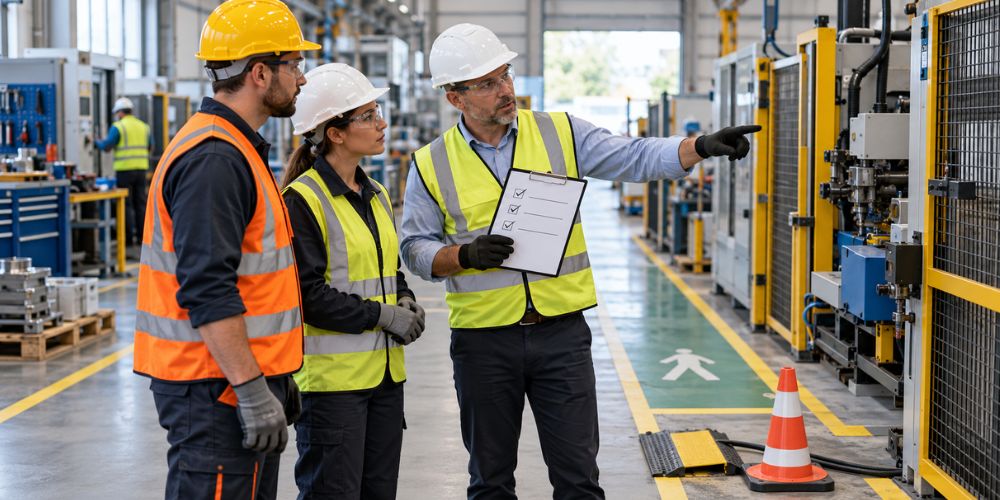
A warehouse is one of the most important parts of any business that stores, handles, or moves goods. It protects stock, supports daily operations, and helps keep the supply chain running smoothly. But because warehouses often hold valuable inventory, expensive equipment, and large volumes of goods, they can also become easy targets for theft, unauthorised access, vandalism, and safety failures.
For many business owners, warehouse security is not only about locking the gates at the end of the day. It is about creating a system that protects people, stock, vehicles, records, and the wider operation. A single weak point can lead to serious consequences, including missing inventory, damaged property, delayed deliveries, fire risks, and financial loss.
The good news is that improving warehouse security does not always require complex solutions. In many cases, consistent procedures, better monitoring, trained staff, and stronger physical protection can reduce risk in a big way. When these measures work together, they help create a warehouse that is safer, more controlled, and more reliable.
What are Some Common Warehouse Security Challenges and Threats?
Warehouse owners often deal with a variety of security threats coming from both internal and external sources. Understanding these risks is the first and most important step toward building a safer and more secure warehouse environment.
- Internal and External Theft: Valuable stock may be targeted by both employees and outside intruders, making theft one of the most common warehouse security risks.
- Uncontrolled Access: When entry points are not properly managed, unauthorised individuals may gain access to restricted areas and sensitive inventory.
- Vandalism: Warehouses located in remote, isolated, or industrial areas may face a higher risk of property damage and deliberate disruption.
- Fire Risks: Faulty electrical systems, overloaded equipment, and poor storage practices can increase the chance of fire and serious damage.
- Insufficient Staff Training: Even advanced security systems can fail if employees are not properly trained to follow security procedures and respond to risks.
- Surveillance Blind Spots: Gaps in camera coverage can leave certain areas unmonitored, creating opportunities for theft, tampering, or unnoticed security breaches.
12 Simple Yet Effective Warehouse Security Tips
Strong warehouse security is built through layers. Cameras help, but they are not enough on their own. Locks matter, but so do people. Policies matter, but only when they are followed consistently. The best results come when technology, physical protection, staff training, and good procedures all support each other.
Below are twelve smart warehouse security tips that can help business owners reduce risk and improve control.
Conduct Regular Security Audits
A security audit helps you understand where your warehouse is strong and where it is exposed. Many businesses continue using the same setup for years without checking whether it still fits current risks. Over time, operations change, layouts change, and security needs change too.
A proper audit should look at access points, CCTV placement, alarm performance, fencing, lighting, visitor procedures, delivery handling, and staff compliance with security rulesIt should also look at whether past incidents or near misses show a bigger security problem.
Regular audits make it easier to identify issues early. A damaged gate, a blind camera angle, or a poorly controlled side door may not look serious at first, but these small weaknesses are often the points where bigger problems begin.
Improve CCTV Surveillance Coverage
CCTV is one of the most useful warehouse security equipment when it is planned properly. Cameras help deter theft, support investigations, and improve awareness of what is happening across the site. But the system must cover the right locations.
Entrances, exits, loading bays, storage zones, dispatch points, external fencing, parking areas, and high-value stock locations should all be considered. Footage should be clear enough to identify people, vehicles, and handling activity, especially in low-light conditions.
It is also important to review camera angles regularly. Warehouses change as shelves are moved, stock levels shift, and work patterns evolve. A camera that was once useful may later be blocked or less effective.
Hire Professional On-Site Security Guards
For many warehouses, especially larger or higher-risk sites, on-site security guards add a strong extra layer of protection. Their presence can help prevent crime, improve control at entry points, and allow quicker action when suspicious activity occurs.
Manned guards can monitor visitors, verify credentials, check vehicles, patrol the premises, supervise loading activity, and respond to incidents after hours. Unlike cameras or alarms, trained guards can make immediate judgments and take action in real time.
They are particularly valuable during evenings, weekends, and shift changes, which are often the times when warehouses face greater threats. Visible professional guarding can also reassure staff and improve overall site discipline.
Implement Strong Access Control Systems
Not every worker or visitor should be able to enter every part of the warehouse. Access control is one of the most effective ways to reduce both internal and external risk.
This may include keycards, PIN systems, digital passes, biometric scanners, or restricted permissions based on job roles. Sensitive areas such as stock rooms, offices, server spaces, and dispatch sections should only be accessible to authorised personnel.
A strong access system also creates a record. If an incident happens, digital logs can help show who entered certain zones and when. This improves accountability and makes it easier to investigate irregular activity.
Old access permissions should also be reviewed often. When staff leave, transfer roles, or no longer need certain permissions, access should be removed without delay.
Secure All Warehouse Entry Points
A warehouse can only be as secure as its weakest entry point. Front entrances matter, but so do loading doors, emergency exits, side gates, shutters, and lesser-used access areas.
Business owners should check whether doors are solid, locks are fit for purpose, and gates close properly. Alarm contacts and sensors can add another layer of protection, especially outside normal working hours.
Less obvious points should not be ignored. Criminals often look for the entry point that receives the least attention rather than the one that appears most important. A back gate or service door may be a greater risk than the main entrance if it is rarely checked.
Secure the Warehouse Perimeter
The perimeter is the first visible barrier between your business and an outside threat. If that barrier is weak, the entire site becomes easier to approach and test.
Good perimeter security usually includes strong fencing, secure gates, clear site boundaries, warning signage, and effective external lighting. Lighting is especially important because it reduces hiding spots and helps CCTV perform better at night.
The outside of the warehouse should also be kept tidy. Overgrown vegetation, stacked materials near fences, and clutter around the building can create cover for intruders or help them climb barriers more easily.
A perimeter should be inspected routinely. Damage, wear, or weak spots can appear gradually and go unnoticed unless someone is responsible for checking them.
Monitor and Supervise Deliveries Carefully
Deliveries and dispatches are among the busiest and most vulnerable parts of warehouse operations. Goods are constantly moving, paperwork is changing hands, and outside drivers may need temporary access to the site.
That makes this area a common point for theft, stock errors, and unauthorised movement. Every delivery should follow a clear and controlled process. Drivers should be signed in properly, shipment details should be checked, and loading or unloading should be supervised by a responsible team member.
It also helps to control where visiting drivers can go. Delivery personnel should not be walking freely through storage zones unless it is operationally necessary and properly supervised. Good delivery control reduces confusion and creates a stronger environment.
Install Alarm Systems
Alarm systems remain a key part of warehouse protection, especially outside business hours. They can alert your team to forced entry, movement in restricted areas, fire hazards, or other emergency conditions.
A reliable system should cover major access points and high-risk areas, and it should be tested regularly to make sure it still works as expected. A system that is poorly maintained can create false confidence, which is dangerous in itself.
Many businesses also benefit from linking alarms with remote monitoring or rapid response support. The value of an alarm is not only that it sounds, but that the alert reaches the right people quickly enough for action to be taken.
Train Employees on Warehouse Security Protocols
Even the best hardware will not protect a warehouse if the people on site do not follow good security habits. Staff are often the first to notice something unusual, so their awareness matters a great deal.
Employees should understand access rules, visitor procedures, delivery checks, suspicious activity reporting, and emergency actions. They should also know why these rules are important, not just that they exist.
Training should be practical and regular. One briefing at induction is not enough. Security awareness needs to be part of workplace culture so that staff stay alert and consistent in their day-to-day actions.
Maintain Accurate Inventory Records
Inventory control is one of the strongest security strategies a warehouse can have. If stock records are accurate, missing items can be detected earlier and investigated faster. If records are poor, losses may continue for weeks before anyone notices a pattern.
Goods should be tracked clearly from arrival to storage to dispatch. Regular stock counts, barcode systems, scanning tools, and warehouse management software can all improve visibility.
When discrepancies do appear, they should not be dismissed as routine mistakes without review. Repeated small losses can point to bigger control issues that need attention.
Build a Strong Fire Safety Strategy
Fire safety should never be treated as separate from warehouse security. A serious fire can cause massive damage, long interruptions, and immediate danger to life.
A strong fire strategy includes regular risk assessments, clear storage practices, maintained electrical systems, smoke and fire detection, extinguishers, emergency exits, and staff awareness. Goods should be stored in a way that does not block routes or increase avoidable fire load.
Emergency procedures should be easy to understand and easy to follow. In a warehouse setting, speed and clarity matter. If people do not know where to go or what to do, a manageable incident can become far more dangerous.
Review and Strengthen Staff Security Standards
Warehouse security also depends on the standards expected from the people who work there. Hiring checks, role-based access, supervision, and clear disciplinary procedures all help create a more secure environment.
Standards should apply to permanent staff, temporary workers, agency labour, and contractors. Everyone on site should understand the same basic rules around access, reporting, stock handling, and restricted areas.
Managers should pay attention to habits that often get ignored, such as sharing passes, leaving doors open, bypassing sign-in procedures, or failing to report unusual activity. These small behaviours may seem harmless, but over time they create real security weaknesses.
Protect Your Warehouse with G3 FM Services
G3 FM Services helps businesses improve warehouse security with practical and dependable solutions. We provide professional support including on-site security services, CCTV monitoring, access control, and alarm systems to help protect your stock, staff, and premises. Our team works with you to understand your risks and put the right measures in place for your site. Whether you operate a small warehouse or a large distribution centre, we focus on safety, reliability, and day-to-day protection. With G3 FM Services, you can create a more secure warehouse environment and keep your operations running with greater confidence and peace of mind.
Conclusion
Warehouse security is not about one camera, one guard, or one locked gate. It is about building a complete system that protects your people, your stock, and your daily operation from avoidable risk.
Business owners who take a layered approach are in a much stronger position. Regular audits, better CCTV, access control, stronger entry points, delivery supervision, reliable alarms, accurate stock records, trained employees, and fire safety planning all work together to create a safer warehouse.
The most effective approach is to start with the biggest risks on your site and improve them one by one. Small changes, when applied consistently, can make a major difference over time.