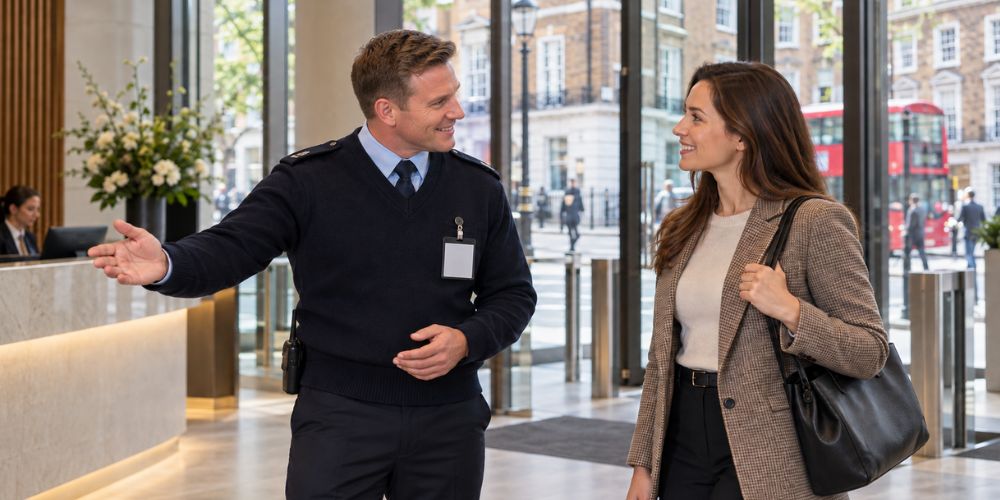
When people picture close protection, they usually imagine the visible part of the job, a bodyguard opening a car door, scanning a crowd, or walking a step behind a client through a busy lobby. What they don’t see is the work that happens days, sometimes weeks, before any of that: the threat and risk assessment.
This is the process that decides everything else. How many officers are deployed. Which vehicles are used. Which routes are taken, and which are avoided altogether. Without a solid assessment, a protection team is essentially guessing, and guessing in this line of work can be dangerous in both directions. Too little protection leaves a client exposed. Too much wastes money and draws unwanted attention.
Threat and Risk are Not the Same Thing
It’s easy to use these two words as if they mean the same thing, but in close protection they describe two different questions.
A threat is anything with the potential to cause harm: a person, a group, a set of circumstances. It could be a specific individual with a grudge, a criminal organisation interested in kidnap for ransom, or simply the general danger that comes with being wealthy or high-profile.
Risk is a different question entirely, how likely is that threat to actually happen, and how bad would it be if it did?
Here’s a simple way to see the distinction. Imagine a foreign entrepreneur visiting London for a week of meetings. Almost nobody on the street would recognise them, so the threat of being randomly targeted or harassed in public is quite small. But their personal wealth might make them an attractive target for a planned, organised kidnap attempt, a much smaller likelihood, perhaps, but a far more severe consequence. A good assessment keeps these two dimensions separate so the security team can put its effort where it actually matters, rather than spreading resources thin trying to guard against everything equally.
What Actually Goes Into an Assessment
Building an accurate picture of a client’s risk isn’t a matter of filling in a form. It’s an ongoing investigation that starts the moment someone picks up the phone to enquire about protection.
A competent security provider will typically look at:
- The client’s public profile, how recognisable they are, what makes them a target, and whether there’s a history of prior threats or incidents
- Their routines and locations, the places they visit regularly, since predictable patterns are exactly what a hostile actor would exploit
- Personal circumstances, relationships, business dealings, political or religious associations, anything that might create friction with another party
- Physical vulnerabilities, including medical conditions, which clients are sometimes reluctant to disclose but which can be critical in an emergency
- The environment itself, reconnaissance of venues and travel routes, and where relevant, coordination with police or other local authorities
Some of this information is straightforward to gather. Some of it requires real trust between the client and the security team, which is one reason experienced providers invest time in relationship-building rather than treating the assessment as a box-ticking exercise.
Turning Information Into a Plan
Once the threats are identified, they need to be weighed against one another. Most professional teams use some version of a risk matrix, plotting each identified threat against both its likelihood and its potential severity. This produces a ranked list rather than a vague sense of unease, and that ranking is what determines the shape of the operation.
A client facing a low overall risk might need nothing more than a single, low-profile officer who blends into the background. A client facing a severe, credible threat, the kind of protection detail built around a head of state, requires a completely different scale of resourcing: multiple officers, layered security, advance teams, and detailed contingency planning.
For context, it’s worth knowing the UK’s national threat level system, which describes the general likelihood of an attack across the country:
- Low: An attack is unlikely
- Moderate: An attack is possible but not likely
- Substantial: An attack is a strong possibility
- Severe: An attack is highly likely
- Critical: An attack is expected imminently
The Assessment is Never Finished
Perhaps the most important thing to understand about threat and risk assessment is that it doesn’t end once the initial plan is written. It continues in two distinct ways.
The first is ongoing reassessment: revisiting the plan whenever something changes in the client’s life. A new business venture, a change in public visibility, travel to a less stable country, all of these can shift the risk picture and require the security plan to be updated accordingly.
The second is dynamic assessment: the constant, real-time judgement calls made by officers while they’re actually working. Is that person walking toward the principal behaving normally? Why has that car been parked in the same spot for twenty minutes? Is the pavement icy enough to be a genuine fall risk? Everyone makes small dynamic risk judgments every day, deciding when it’s safe to cross a road, for instance, but a trained close protection officer does this continuously, at a much higher level of awareness, and it’s this constant vigilance that catches problems before they escalate.
Why Experience Can’t Be Skipped
No checklist, however thorough, replaces genuine experience in this field. Less seasoned operatives are often the ones caught out, either because they weren’t given enough information to properly assess a job, or because they felt pressure to accept a last-minute assignment without asking the right questions first. Taking on a protection job without a proper assessment puts both the officer and the client at unnecessary risk.
An experienced professional knows exactly what to ask before accepting a job, insists on getting the information they need, and is willing to walk away from an assignment that doesn’t add up. That judgement, built over years in the field, is arguably the single most valuable asset a close protection team brings to the table.
The Bottom Line
Threat and risk assessment is the quiet, analytical backbone of close protection work. It’s what separates a genuinely professional operation from one that’s simply reacting to circumstances as they arise. By clearly distinguishing what could go wrong from how likely it actually is, building a detailed understanding of the client, and continuously updating that picture as things change, a good security team delivers protection that’s proportionate to the actual risk, not just a show of force.