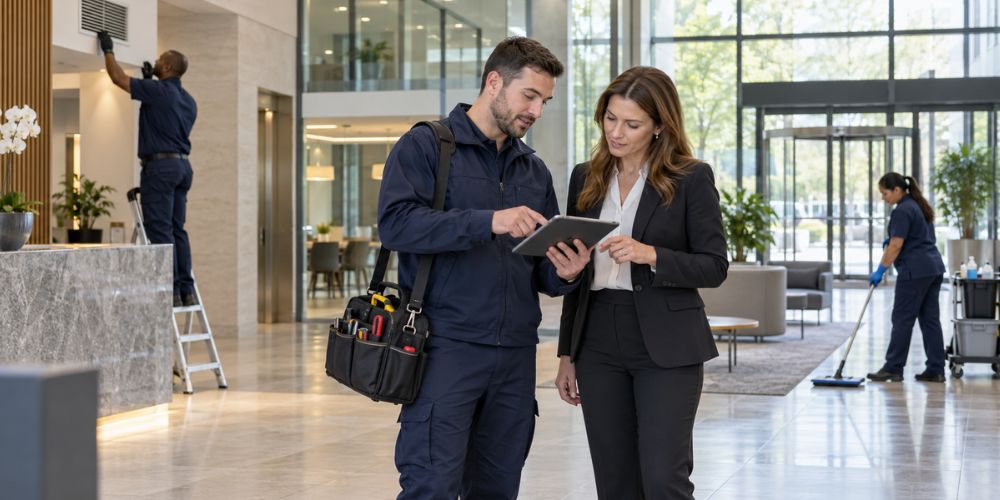
Keeping a business secure involves more than installing CCTV cameras or locking the doors at the end of the day. Security risks can develop over time as staff change, premises expand, technology is introduced, or working procedures evolve. A business security audit provides a structured way to identify these risks and determine whether existing security measures are still effective.
A thorough security audit looks at the premises, people, procedures and technology that help protect a business. It can highlight weaknesses before they contribute to theft, unauthorised access, property damage, data loss or safety incidents. Whether you operate an office, retail store, warehouse or commercial facility, regular security reviews can help create a safer and better-prepared working environment.
What is a Business Security Audit?
A business security audit is a detailed review of the security measures currently in place across an organisation. Its purpose is to identify vulnerabilities, assess potential threats and determine where improvements may be needed.
The audit should consider both physical and operational security. This may include entrances, locks, CCTV, alarms, access control, visitor procedures, staff awareness and incident reporting. Depending on the business, it may also consider cybersecurity and the physical protection of sensitive information and IT equipment.
A security audit should not simply identify problems. It should help the business understand which risks are most important and what practical steps can be taken to address them.
1. Conduct a Physical Security Assessment
The physical premises are a good place to begin. Walk around the entire property and examine it from the perspective of someone attempting to gain unauthorised access. Look at external boundaries, entrances, emergency exits, windows, loading areas, car parks and other potential access points.
Doors and windows should close properly and have suitable locking systems. External lighting should provide adequate visibility around entrances, pathways and vulnerable areas. Fences, gates and barriers should also be inspected for damage or weaknesses.
CCTV coverage should form part of the assessment. Check whether cameras cover important areas and whether there are significant blind spots. Cameras should be positioned appropriately, maintained properly and supported by suitable procedures for storing and accessing footage.
2. Review Access Control and Visitor Management
Businesses need to know who can enter their premises and which areas they are permitted to access. Poor access control can allow unauthorised individuals to reach offices, stockrooms, warehouses or other restricted areas.
Review how employees enter the building and how keys, access cards, codes or other credentials are issued and managed. Access rights should be appropriate to each person’s responsibilities. Credentials belonging to former employees should be cancelled promptly.
Visitor procedures are equally important. Consider how visitors, contractors and delivery personnel are identified, recorded and directed while on the premises. Where necessary, visitors should sign in, receive identification and be accompanied in restricted areas.
3. Alarm Systems and Security Monitoring
Alarm systems provide an important additional layer of protection, particularly when premises are unoccupied. During the audit, check that intruder alarms and other security systems are functioning correctly and are tested and maintained as required.
The audit should also establish what happens when an alarm is activated. A system is only effective when there is a clear response procedure. Staff should know who receives alerts, who is responsible for responding and when the police or other emergency services should be contacted.
Businesses using monitored CCTV should also review how monitoring is carried out, who has access to the system and how incidents are escalated.
4. Staff Security Awareness and Procedures
Technology cannot address every security risk. Employees are often among the first people to notice suspicious behaviour, unsafe conditions or unusual activity, making staff awareness an important part of business security.
A security audit should assess whether employees understand their responsibilities. Staff should know how to report suspicious activity, what to do during an emergency and who to contact when they have a security concern.
Procedures should be clear and easy to follow. Regular training can help employees understand issues such as access control, visitor management, theft prevention, emergency response and the safe handling of sensitive information.
5. Consider Cybersecurity and Information Security
Physical and digital security are increasingly connected. A person who gains unauthorised physical access to an office may also gain access to computers, documents, networks or confidential business information.
As part of the audit, consider how computers, servers and other IT equipment are physically protected. Sensitive documents should not be left where unauthorised people can easily access them, and confidential information should be disposed of securely.
Businesses should also promote good cybersecurity practices, including strong passwords, appropriate account access and awareness of phishing and social engineering. A detailed technical cybersecurity audit may require a qualified IT or cybersecurity specialist, but basic information-security risks should still be considered during the wider business security review.
6. Review Previous Security Incidents
Past incidents can provide valuable information about current vulnerabilities. Review records of theft, vandalism, unauthorised access, workplace violence, alarm activations and other relevant security events.
Look for patterns. For example, repeated incidents in the same area or at similar times may indicate a weakness that has not been fully addressed.
It is also useful to review how previous incidents were handled. Consider whether staff followed procedures, whether security systems worked as expected and whether reporting was accurate. Lessons from previous events can help prevent similar problems in the future.
7. Assess Emergency Preparedness and Response
Security audits should consider how prepared the business is for emergencies. Depending on the premises, this may include fire, violence, suspicious packages, medical emergencies, power failures or other serious incidents.
Emergency exits should remain accessible and clearly identified. Employees should understand evacuation procedures, assembly points and their individual responsibilities.
The audit should also check whether emergency contact information is current and whether staff know how to raise an alarm or request assistance. Where relevant, first-aid arrangements and communication systems should also be reviewed.
8. Review Security Policies and Compliance
Security procedures should be supported by clear written policies. Review existing policies to determine whether they accurately reflect current operations and risks.
Policies may cover access control, visitors, CCTV, incident reporting, keys, confidential information, lone working and emergency response. They should clearly explain responsibilities and the steps employees are expected to follow.
Businesses should also consider relevant legal, regulatory and contractual requirements. For example, CCTV and personal information must be handled in accordance with applicable data protection requirements. Where security personnel perform licensable activities, businesses should ensure that the appropriate licensing requirements are met.
9. Identify and Prioritise Security Risks
Once the different areas of the business have been reviewed, the findings should be organised according to risk. Not every weakness requires the same level of attention.
Consider both the likelihood of an incident and the potential consequences. A minor issue with limited impact may be less urgent than an unsecured access point that could expose employees, valuable stock or sensitive information.
Prioritising risks allows the business to focus its time and resources where they can make the greatest difference. High-risk issues should normally be addressed first, while lower-risk improvements can be scheduled appropriately.
10. Create a Security Action Plan
The final stage of the audit is turning the findings into practical improvements. A security action plan should clearly describe each identified issue, the recommended action, who is responsible and when the work should be completed.
Some improvements may be straightforward, such as repairing a lock, improving lighting or changing an access code. Others may require longer-term investment, such as upgrading CCTV, introducing a new access control system, improving staff training or using professional security personnel.
The action plan should be reviewed regularly to ensure agreed improvements have been completed and are working effectively.
How Often Should You Conduct a Business Security Audit?
There is no single schedule that suits every organisation. The frequency should reflect the size of the business, its premises, activities and level of risk. Regular reviews are useful because security conditions can change even when the business appears to be operating normally.
An additional audit may be appropriate after a break-in, theft or other serious incident. Businesses should also consider reviewing security after moving premises, carrying out major renovations, changing operating hours, introducing new technology or experiencing significant changes in staffing or operations.
Internal vs Professional Security Audits
Some businesses can conduct basic security reviews internally, particularly when managers have a strong understanding of the premises and existing procedures. Internal reviews can be useful for identifying straightforward issues and checking whether established policies are being followed.
However, an external security professional can provide a fresh perspective and may identify vulnerabilities that employees have become accustomed to seeing. Professional support can be particularly valuable for large premises, high-risk locations or businesses experiencing repeated security incidents.
Discuss Your Needs with Security Company
A business security audit helps identify weaknesses, but deciding how to address them can require professional guidance. Discussing your concerns with a security company can help you understand your priorities and consider measures suited to your premises. Whether you are reviewing access control, CCTV coverage, visitor procedures or staff awareness, start by outlining your current arrangements and any previous incidents.
Contact G3 FM Services to discuss your business security needs and ask about available support. Share your operating hours, property layout, budget and main concerns so the conversation focuses on practical next steps for protecting your people, property and operations.
Final Thoughts
A business security audit is not simply a checklist exercise. It is an opportunity to understand how well your premises, people, procedures and security systems work together.
By reviewing physical security, access control, alarms, staff awareness, information security, previous incidents and emergency procedures, businesses can identify vulnerabilities and prioritise meaningful improvements.
Most importantly, the audit should lead to action. Security risks change over time, so businesses should regularly review their arrangements, address identified weaknesses and make sure employees understand their responsibilities. A proactive approach can help protect people, property, information and day-to-day business operations.